
Step 01
Establish requirements
Specified strength, exposure class, workability, maximum aggregate size, placing method and any sulphate or chloride limits are confirmed from the chemical test results and the specification.
A mix designed for your materials, your exposure and your placing conditions, then proven by trial batch before it goes anywhere near the structure.
Design starts from the target mean strength, not the specified strength. The specified characteristic strength is a value only a small proportion of results may fall below, so the mix is designed for a mean high enough above it to absorb the plant's own variability. A plant with poor control needs a richer mix to hit the same specified strength, which is a real cost of poor quality control.
Water to cement ratio then does most of the work. It governs strength and, just as importantly, permeability, which is what governs durability. On a coastal or sulphate bearing site the ratio and the minimum cement content are often fixed by the exposure class before strength is even considered, and the strength then follows from the durability requirement rather than the other way round.
Aggregates are tested and proportioned for grading, shape, specific gravity, absorption and moisture, since aggregate moisture has to be corrected for in the batch water or the mix arrives wetter than designed. Admixtures are trialled with the actual cement, because plasticiser performance varies with cement chemistry. The result is proven in a trial batch tested for slump, density, air content and strength at 7 and 28 days.
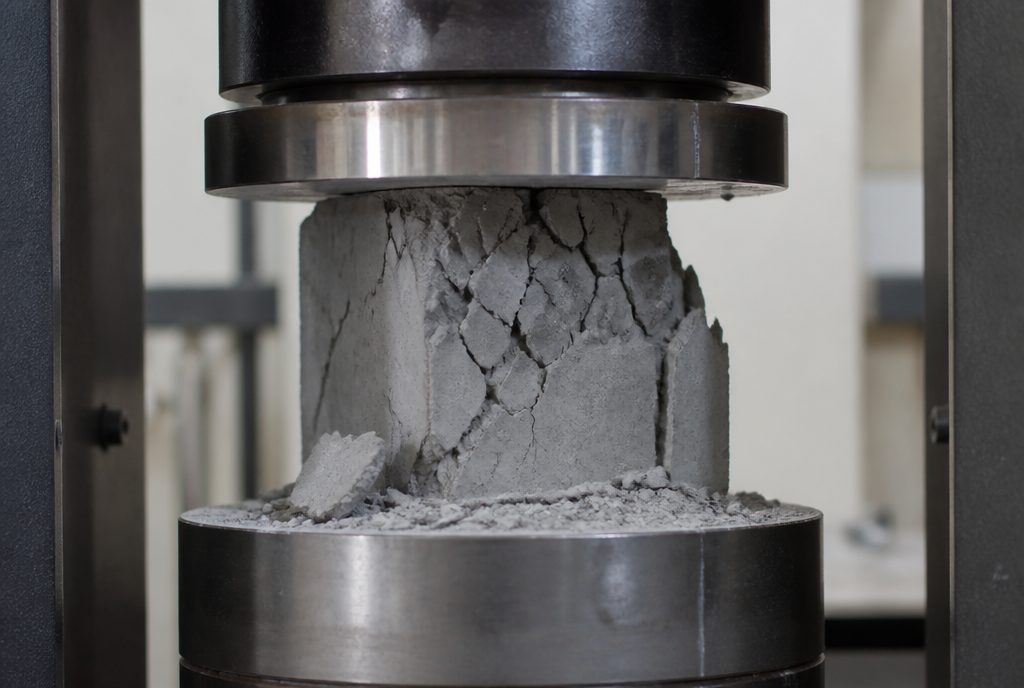
The sequence we follow on site and in the laboratory, and the point of each stage.
Specified strength, exposure class, workability, maximum aggregate size, placing method and any sulphate or chloride limits are confirmed from the chemical test results and the specification.
Cement, aggregates and water are tested for grading, specific gravity, absorption, moisture, silt content and impurities.
Target mean strength is set from the specified strength and the expected standard deviation, then water to cement ratio, cement content and aggregate proportions are calculated to ACI 211 or BS methods.
A laboratory trial is mixed and tested for slump, air content, density and compressive strength, with adjustments made and the batch repeated until every criterion is met.
Batch quantities per cubic metre are issued with the aggregate moisture correction explained, and a full scale plant trial confirms the mix performs as designed.
Every result is reported with its method reference and the calibration status of the instrument used.
What engineers most often ask us about concrete mix design.
Most investigations combine several of these. We scope them together so you are not paying to mobilise twice.

Concrete is specified by a strength it will not reach for 28 days, on a site where it is placed in minutes.
Read more
Ground chemistry decides how long your concrete and reinforcement last.
Read more
The recipe your asphalt plant runs to, established by testing your actual aggregates and your actual binder rather than...
Read moreSend us the location, the structure and your programme. You get a scoped quotation with the standard, the number of tests and the turnaround written into it.